


How to Get Rid of Dust Mites in Carpet?
How to get rid of dust mites in carpet is one of those questions that quietly troubles homeowners for months, or even years, before frustration finally kicks in and initiates a search for answers. You notice the sneezing, the itchy eyes on weekend mornings, and the persistent cough that seems to be getting worse at night.
These are not random problems. They are often your body’s reaction to millions of microscopic dust mites living deep within your carpet fibres, thriving in the warm, humid conditions of your home. The worst part is that they are almost invisible, which makes the problem feel overwhelming and the solution out of reach.
The good news is that removing dust mites from carpet is entirely achievable. You just need a clear, practical strategy tailored to your home and circumstances. This guide walks you through simple, realistic methods which you can consider to keep your carpets fresher and the air in your home cleaner.
But, before that, lets have a quick look at some aspects of dust mites and why removing them from carpet is necessary.
What is a Dust Mite And Why You Should Remove Them From Your Carpet?
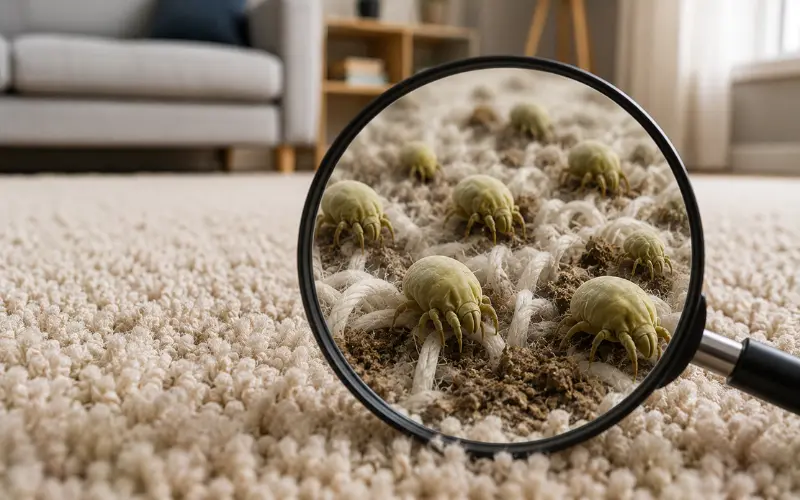
House dust mites are tiny creatures, roughly 0.2 to 0.3 millimetres in size. They are relatives of spiders and ticks and are very small to see without magnification. They feed on dead skin cells that humans naturally shed. Their droppings contain allergens that trigger immune responses in sensitive individuals. A single carpet can harbour millions of them.
This surely made you think - how do they get on carpets? Well, from what I've seen across different homes and situations while cleaning, dust mites reach your carpet in the following ways:
- Human movement spreads skin cells throughout the home.
- Air circulation allows particles to settle on fabric surfaces.
- Pets carry and deposit skin cells through fur.
- Textiles brought indoors, introducing them via clothing and soft furnishings.
- Humidity encourages reproduction and survival in carpet fibres.
Why Remove Dust Mites From Carpet?
In our professional observation, dust mites multiply rapidly in warm, humid environments, making carpets their ideal habitat. Their presence triggers persistent sneezing, itchy eyes, nasal congestion, and worsening asthma, particularly at night.
For allergy sufferers, dust mites worsen eczema and respiratory inflammation. This is why removing them from your carpet is important, as it isn't merely about cleanliness but reclaiming a comfortable, allergy- and symptom-free living environment.

5 Useful Tips on How to Get Rid of Dust Mites in Carpet By Yourself
When you decide to tackle dust mites, for light to moderate infestations, you can follow simple DIY routines to remove dust mites. The approach is clear: deny them food, disrupt their habitat and remove them physically.
Here's what my team and I believe will work in routine practice:
#1.Vacuuming
Vacuuming dust mites from carpet with a HEPA filter stops redistribution of fine allergens. Vacuum gradually with overlapping passes on carpets near high‑traffic areas and bedrooms. Focus on carpet edges, under furniture and in creases.
Empty or change bags outdoors and clean filters regularly. Aim for twice weekly in most rooms. Increase the weekly frequency if someone has allergies or asthma.

#2. Hot Water Washing
Carpets should be washed in hot water if manufacturer guidelines allow it. Heat kills dust mites at 55°C and above. Set your washing machine to its hottest cycle and wash items on their own.
Now, fabric items near your carpet need to be washed as well. The reason is simple: dust mites infest carpets because of continuous movement activities, transferring between bedding, throws, and upholstery. Washing these alongside carpet textiles prevents re‑seeding.
Pro Tip: Don’t overload the drum, as too much material inside restricts hot-water flow and leaves cold, moist spots, which allow mites to survive.
#3. Control Humidity
Reduce humidity by improving ventilation. Keep windows open, use extractor fans in bathrooms and kitchens. Check the relative humidity (RH) within your house. If RH is high, use a dehumidifier to keep indoor humidity under 50% ( temperature is within 18 to 22 °C), to prevent dust mites from reproducing.
#4. Sunlight Exposure
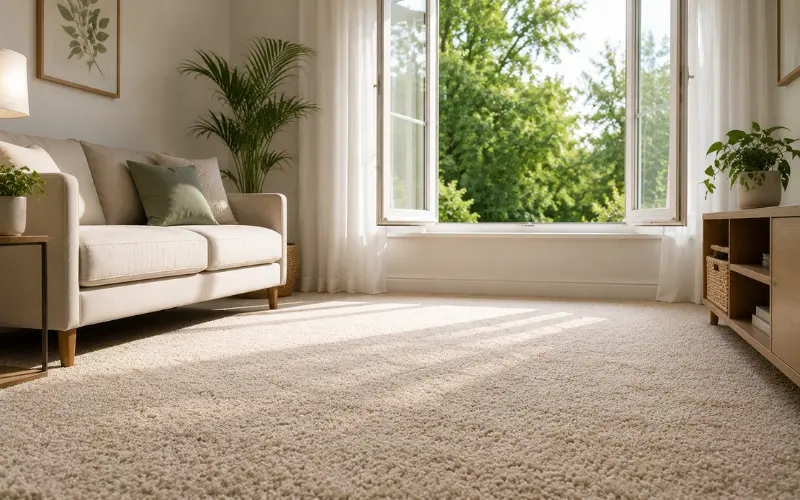
While sunlight exposure won’t work for fitted carpets, it's a powerful method to eliminate dust mites from carpet. Secondary fabrics such as throws, cushions, and soft furnishings continually transfer mites back into carpet fibres through daily movement and activity. Treating them prevents dust mites from thriving on carpet fabric.
After washing, dry thoroughly and, where possible, expose the carpet and other fabric items to direct midday sunlight (if weather permits). Our technicians believe keeping them out for 30 to 45 minutes should do the trick. Dust mites cannot sustain prolonged UV exposure, and sunlight also helps reduce allergen load.
#5. Professional Dust Mite Removal
For fitted carpets or large rugs with stubborn dust mite infestations, professional carpet cleaning is highly effective. My team is trained by reliable experts such as Cleansmart and Texatherm Systems. Our technicians begin with a detailed inspection to identify hidden allergen build‑up, recurring stains, or fibre distortion, ensuring the right approach is selected.
Afterwards, they use van‑mounted hot‑water extraction to penetrate beneath the carpet padding, flushing out mites, allergens, and deep soil. Safe, residue‑free solutions are applied, followed by industrial drying equipment to prevent dampness and odour. This controlled process not only disrupts dust‑mite habitats, but also reduces long‑term allergen exposure and restores carpet health.
Signs You Need Professional Carpet Cleaning For Dust Mites
We’ve observed that houseowners miss the cues which indicate the need for professional intervention to remove dust mites from carpets. Below are some of the prominent signs you must know about:
- Constant allergy flare‑ups, you notice: sneezing, congestion, itchy eyes, or asthma symptoms that continue despite regular DIY cleaning.
- Recurring stains and odours, musty smells or dirty spots return even after thorough cleaning, signalling deep allergen build‑up and mite infestation.
- Visible mite debris, heavy accumulation of pepper‑like droppings or fine dust on carpets and upholstery fabric.
- DIY upkeep is no longer effective. Vacuuming, washing, or airing items fails to reduce symptoms or allergen load.
- Humidity problems indoors are consistently high, over 60%, ideal conditions for mites to grow, and self-cleaning carpet can’t fully control.
- Long gaps since last professional carpet cleaning (12 or 18 months), allowing mites and allergens to multiply.
- Other Fabric materials reinfesting rugs, cushions, or throws constantly harbour mites, which also settle into fitted carpets.
Preventive Tips to Control Dust Mite Infestation
Proactive action is better than waiting for dust mites to worsen the issue. We firmly believe that homeowners who spot and reduce mite habitats early make DIY upkeep more effective, ensure carpets are easier to maintain, and extend their lifespan by scheduling on-time professional cleaning.
Here are some tips which you can consider to prevent dust mite accumulation:
- Avoid having wall‑to‑wall carpeting, heavy curtains, and down‑filled bedding that cannot be cleaned at ≥60 °C.
- Choose washable flooring, roll‑up shades, and non‑fabric furniture so you can clean regularly and minimise mite reservoirs.
- Remove mess, limit stuffed toys, cushions, and fabric materials that trap allergens.
- Every month, consider putting your carpets, rugs, or upholstery fabric outside in daylight for 45 minutes or an hour.
- Use dehumidifiers to keep humidity under 50%, as mites don’t reproduce in such conditions.
Stop Worrying and Let Pros Like Us Remove Dust Mites From Your Carpet
You know how to remove dust mites in carpets using proper methods. Our experts emphasise that it's important to outline a cleaning schedule. However, at times, simple vacuuming, hot-water washing, or airing won't work. You may need assistance from carpet cleaning specialists to clean your carpets and remove dust mites.
Alliance Carpet & Upholstery Cleaning has more than five years of experience in professional carpet cleaning. Our team uses methods that complement your regular upkeep and restore the fabric’s original vibrancy, while removing mites to reduce allergen exposure. They use effective, eco‑friendly solutions to deep clean carpets and eliminate dust mites that routine vacuuming cannot reach.
Give us a call today to make your house mite-free.
FAQs
1) How long do dust mites live in carpet?
Dust mites live in carpet for about 2 to 3 months, ending their life cycle within fibres where food and humidity are present. Without cleaning or humidity control, they quickly multiply, worsening allergen exposure and elevating health risks.
2) What type of carpet does not get mites?
Synthetic carpets such as nylon, polyester, and olefin are far less prone to dust mite infestations. Wool carpets marketed for allergy sufferers can also resist mites due to natural properties and modern treatments, but synthetics remain the most consistently mite‑resistant reliable option.
3) What is the best homemade mite killer?
Apart from hot water washing, the best homemade mite killer is a mix of baking soda and essential oils such as eucalyptus or tea tree. This natural remedy neutralises mite habitats in carpets and upholstery while freshening fabrics.
4) Do dust mites survive in winter?
Dust mites cannot survive continuous exposure to deep, sub‑zero freezing, but short winter cold is ineffective. Freezing carpets or rugs may kill live mites, yet allergens remain. So, you must still wash or vacuum thoroughly to maintain fabric and tackle health issues.

Peruse more ideas and tricks for your home here:
Lorem ipsum dolor sit amet, consectetur adipiscing elit.

