


How Long Do Carpets Last Before Replacing?
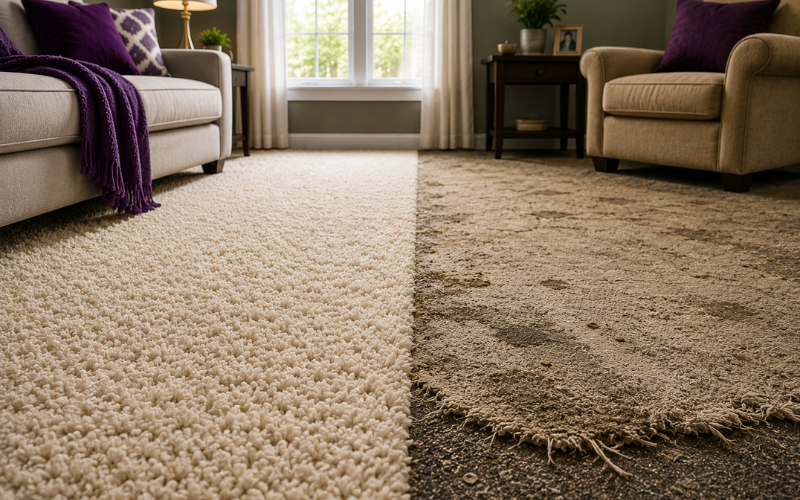
Carpets tackle the weight of daily life, and the fabric condition tells a story of use. Flattened fibres in hallways, fading near windows, or stain marks that refuse to go are all signs of an ageing carpet. Hence, it's obvious that many of you get curious: how long do carpets last before replacing?
The answer to this is connected with different aspects. Fibre type, foot traffic, installation quality, and maintenance cleaning routines all play a crucial role in determining its overall lifespan.
Continue reading as this guide explains these factors in detail, helps you assess the carpet’s remaining lifespan, and shows clear signs you need a new carpet. But before you get into the details of when to replace carpets, let’s have a peek at the average lifespan of a carpet in the UK.
How Long Do Carpets Last Before Replacing: Factors & Signs to Consider
On average, you can expect carpets in homes to last between 5 and 15 years before replacement is needed. However, the range varies based on traffic levels, material, and maintenance routine. There is no exact number which suggests how long it’ll last.
Here’s an approximate timeframe of how long carpets last in different areas of the house:
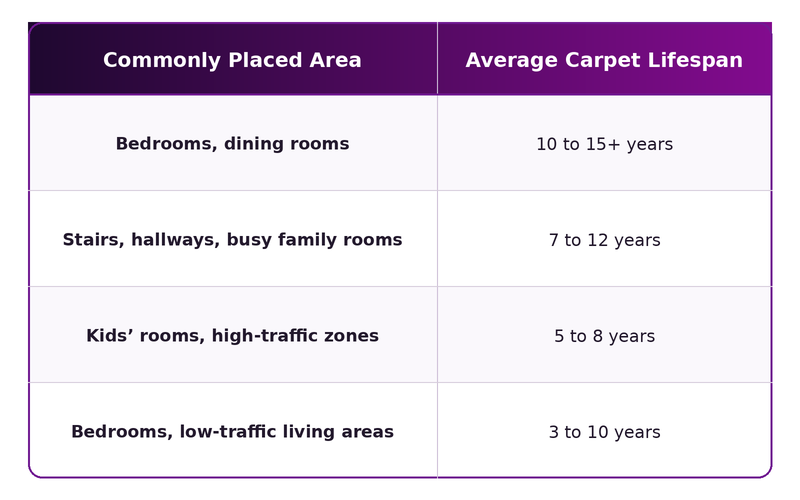
You saw the average lifespan of carpets based on their placement in the household. This surely helps knowing approximately when to replace carpets. For instance, a carpet in your bedroom needs replacement after a decade or so, whereas busy rooms will need replacement after 7 to 12 years.
However, the material, underlay (carpet padding), and daily activities heavily influence the lifespan. Let’s see how:
➨ Carpet Material
Wool has natural elasticity. So, when compressed by foot traffic, fibres recover well and maintain shape for longer. Nylon is highly durable and resists crushing. Its fabric strength slows down wear and helps extend lifespan even with consistent use.
Polypropylene material handles stains well, but fibres flatten quickly, which shortens the carpet's durability and affects lifespan. Polyester is soft and colourful, yet fabric wears off faster, reducing longevity compared to other fibres.
➨ Carpet Padding
Carpet padding (underlay) quality is a critical factor in determining the lifespan. A dense, high‑quality underlay absorbs impact, reducing stress on carpet fabric and slowing down damage. This cushioning effect can add several years to a carpet’s original lifespan.
On the contrary, cheap or reused padding fails to secure fabric. This leads to flattening and premature wear. This shortens its effective lifespan.
➨ Household Activities
The number of people, pets, and daily routines within the house accelerates fibre breakdown or keeps it minimal. Pets shed fur that holds onto fibres, and paws leave scratches that damage carpets.
Children spill food or milk, play, and rub toys, increasing stains and abrasion. Family members leave constant footsteps, which press the fabric regularly. In short, continuous usage reduces the years. If your carpet is expected to last 10 years, high activity can cut it short to 5 or 6 years.
➨ Maintenance Habits
Regular maintenance plays a decisive role in how long carpets last before replacement is needed. When the surface is not cleaned, it acts like sandpaper, cutting fibres and accelerating wear. Simple carpet care habits such as vacuuming, spot cleaning after spills, and rotating furniture prevent dirt from settling deep, keeping structure intact.
Homeowners who act quickly on stains and follow a proper routine, i.e, weekly vacuuming, and monthly deep cleaning (scheduling professional carpet cleaning), slow down visible ageing and extend carpet durability.
5 Major Signs You Need New Carpet
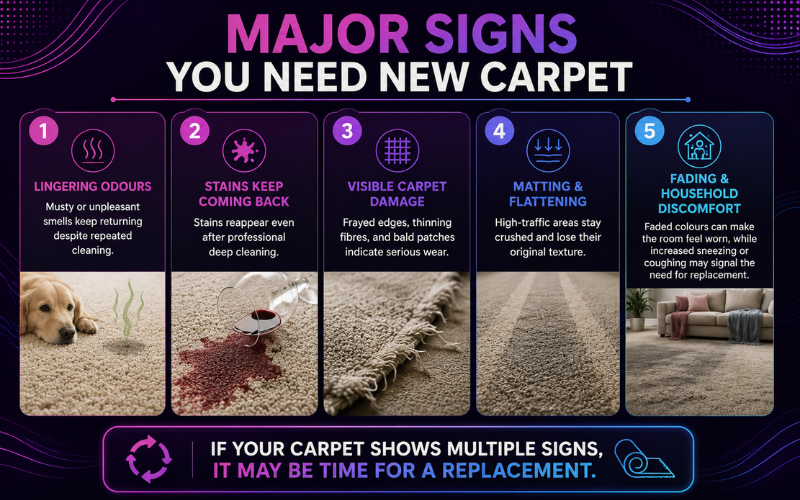
Regular and proper care of carpets only slows down fabric wear. Hence, it’s important to know when you’ll need to replace your ageing carpet. Here are some signs that you must recognise to know when replacement is needed:
- Lingering odours (musty smells) keep returning despite repeated cleaning.
- Stains reappear even after professional deep cleaning of carpet.
- Frayed edges, thinning of the pile, and bald patches are clearly visible, suggesting fabric damage.
- Fibres stay crushed in high‑traffic zones, losing texture, making walking difficult and reducing strength, even after proper maintenance. (Matting and flattening)
- Sudden rise in sneezing and coughing within the household, indicating an ageing carpet.
- Fading of colours, making the room feel unwelcome.
These were some of the prominent signs which showed when you’ll need to replace your existing carpet. However, if the carpet's age exceeds the manufacturer's mentioned threshold in years, don’t forget to replace it.
Maintenance Checklist for New Carpet
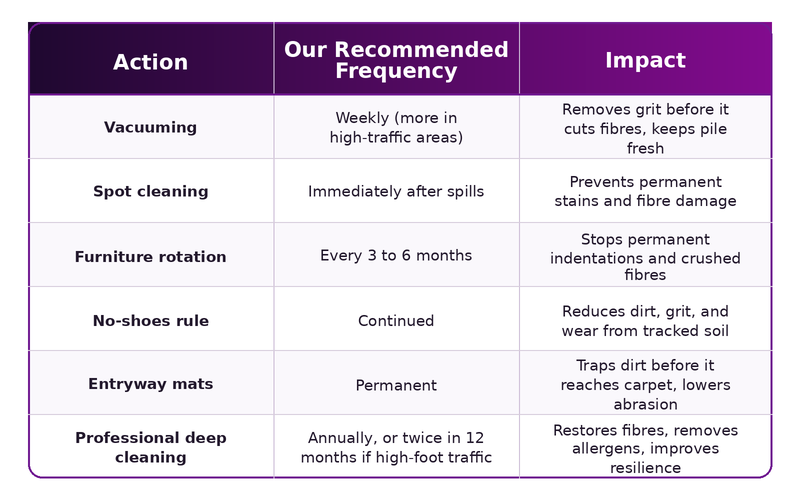
When you get a new carpet installed, it requires frequent maintenance. Hence, you mustn’t skip your DIY routine, assuming that carpet is new and doesn’t need regular care. My team and I believe this can compromise the fabric integrity, reducing its lifespan.
Here’s a table showing the actions that need to be taken:
Allow Specialists to Deep Clean Carpets to Extend Lifespan
The answer to how long do carpets last before replacing is tricky. The general lifespan is about 10 to 15 years, but it changes based on several factors such as material type, household activity, and maintenance. With professional cleaning, you can easily add a few years to your old ageing carpet, or a new one.
At Alliance Carpet & Upholstery Cleaning, we have a certified team that has been providing quality carpet cleaning services for 6+ years. My team and I use industrial-grade truck-mounted tools, eco-friendly solutions, and specialised drying techniques to deep clean your carpets. We ensure your fabric maintains its original look and durability, improving longevity.
Give us a call, and let my carpet cleaning specialists extend your carpets’ life today.
FAQs
1) What’s the best way to prevent carpet allergens?
Vacuum regularly with a quality filter and quickly clean spills to prevent dust from settling deep within fabric layers. Control humidity and keep carpet dry to prevent mould growth. Complement your efforts with annual professional cleaning to keep fibres fresh and allergen-free.
2) How to tell if carpet is high quality?
High‑quality carpet shows dense, tightly packed fibres with strong backing and durable padding. It resists matting, feels firm underfoot, and has a reliable warranty for long‑term performance.
3) How often should carpet be replaced?
In general, you can replace carpet every 5 or 10 years. But we recommend you replace your carpet once it has passed its manufacturer’s recommended lifespan or when you observe visible signs such as stains, odours, mould growth, or fading.
4) Is it okay to have different carpet in different rooms?
Yes, it’s completely okay. In fact, it’s better, since each room faces different foot traffic and activity. For example, you wouldn’t place a tough entrance carpet in a living area, where comfort and style matter more.

Peruse more ideas and tricks for your home here:
Lorem ipsum dolor sit amet, consectetur adipiscing elit.

