


Why Is My Carpet Buckling: How to Fix Buckled Carpet?
Is your living room carpet looking a bit like the Pennines? One day it is perfectly smooth, and the next you've got ripples and bumps running wall-to-wall. In Newcastle, where moist weather and fluctuating humidity are constant, knowing how to fix buckled carpets becomes an instant priority before someone trips over those unwanted peaks or the fabric suffers permanent damage.
The good news is that these buckled carpets are easy to sort. Yes, it's far simpler than you think. Hence, we share some ways to tackle the buckling carpet issue. Keep reading so you can know when to call professionals like us.
But before you try fixing it, let's understand carpet buckling in depth and why it happens.
What is Carpet Buckling and Why Does It Happen?
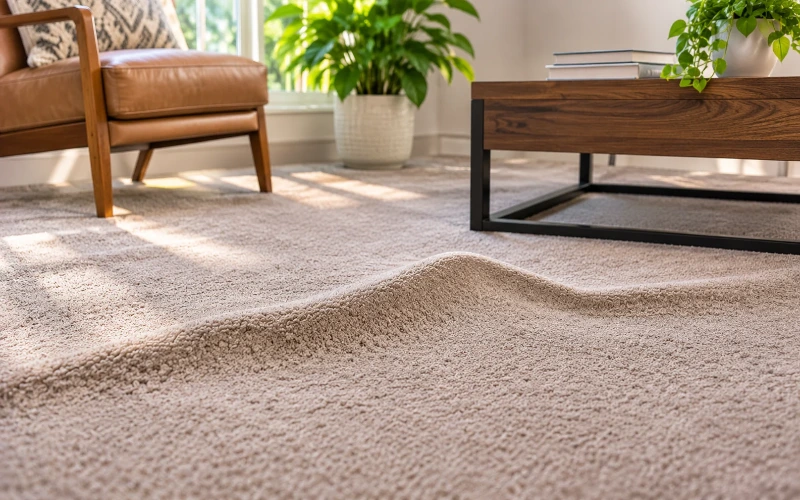
Carpet buckling happens when a fitted floor loses its tight stretch. Instead of staying flat, the fabric rises off the subfloor. You will see wavy ripples or ridges formed across your room.
So, why does carpet buckle? My team and I often highlight these main carpet buckling causes:
- Liquid spills
Water from cleaning, plumbing leaks, or major liquid spills soaks into the carpet layers. When fibre materials absorb liquid, the layers expand and separate. As the backing grows larger than the room, the excess fabric forces itself upward into loose ridges. This also explains why carpet buckling after cleaning is so normal.
- High humidity
In climates like Newcastle, carpet buckling from moisture is quite common. Wet air slowly penetrates the floor fabric. As moisture builds up inside the backing, the material relaxes its grip and begins to swell outward. As a result, the surface loosens and waves across the floor. As a result, the surface loosens and waves across the floor.
- Poor installation
If fitters only use a knee-kicker instead of a power carpet stretcher, they can't pull the carpet tight enough. This leaves loose carpet material behind, and it slowly gathers in the middle of your floor over time to form ridges.
- Heavy loads
Dragging large furniture pulls the fabric completely out of shape. Heavy wardrobes or sofas across the floor create extreme friction. This force rips the carpet free from its perimeter grips and permanently stretches the backing material out of shape.
- Carpet age
Years of foot traffic weaken the carpet backing. Hence, older carpets in heavily used spaces, such as stair landings or living rooms, develop ridges long before newer ones do.
4 Helpful Tips on How to Fix Buckled Carpets (DIY)
If your carpet has minor ridges or ripples, caused by sudden spills or high humidity, quick action can help the fabric relax back into place:
Here’s what my team and I suggest:
1. Dry the area
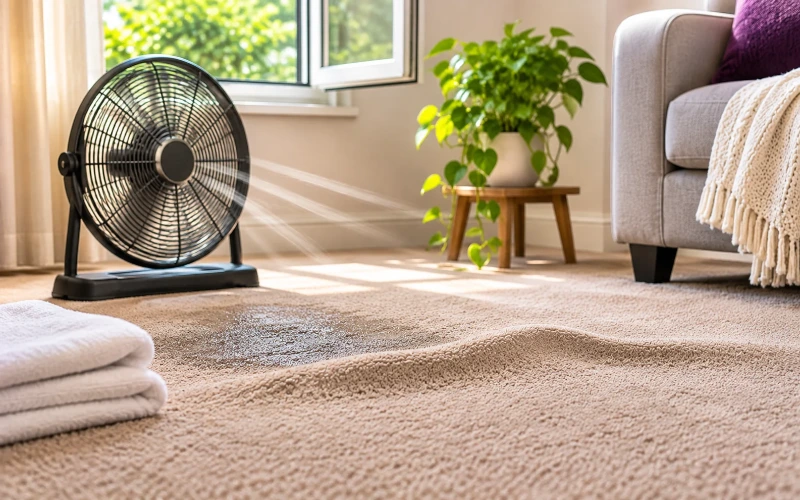
If bumps appear after a spill or cleaning, let the floor dry fully before walking on it. Mild buckles often flatten out naturally once moisture levels drop.
2. Improve indoor airflow
Speed up drying. Open the windows, set up floor fans, or use a dehumidifier (if available) to remove moisture from the room.
3. Move heavy furniture away from the carpet
If a ripple forms near a heavy sofa or wardrobe, move the item temporarily so the compressed fibres can relax and settle flat.
4. Smooth small edge wrinkles by hand
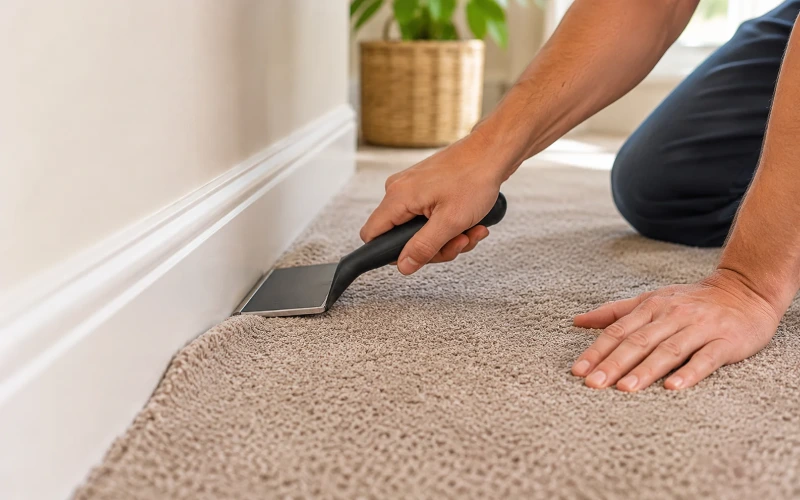
For minor ripples right along the skirting board, you can sometimes use a carpet tucker or flat scraper instead of bare hands to push loose fabric back down onto the existing floor grippers.
If these simple actions don't improve the buckling problem, resist the urge to pull or stretch the carpet yourself. It may feel like an easy task, but it isn't.
Proper carpet stretching requires specialist tools to distribute pressure evenly across the room. Stretching without the right equipment can damage the backing, loosen seams, or form new wrinkles.
You must read this: Carpet care habits for homeowners
When to Call Professionals?
The moment you realise your carpet needs stretching, it's a clear sign to call a professional. Also, if you had no luck fixing the issue with DIY actions that I mentioned, then you are dealing with more than a temporary wrinkle.
Here are some signs indicating when you must seek expert help:
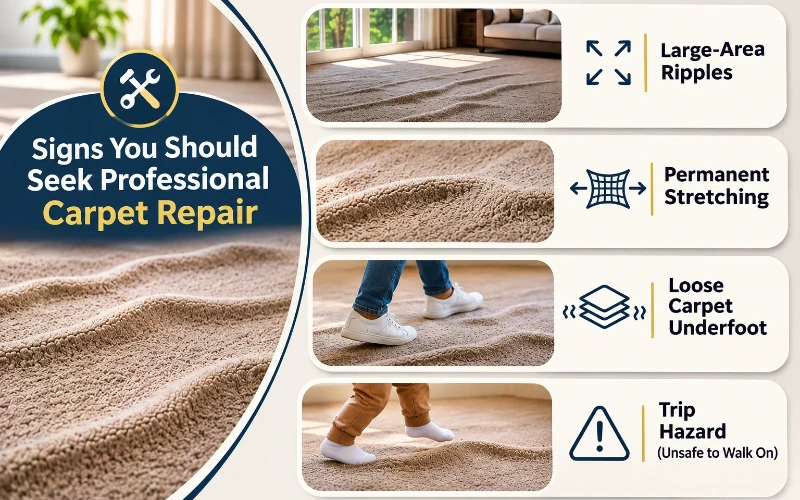
- When ripples cover large areas across open spaces.
- The carpet has stopped shrinking back on its own, suggesting fabric has permanently stretched past its elastic limit.
- The floor feels loose when you walk, suggesting a structural issue.
- You feel that the carpet is no longer safe to walk on. Raised ridges appear to be a tripping risk for young children or elderly family members.
Tips to Prevent Carpet Buckling
To keep your carpets flat and prevent ripples from returning, follow these simple care steps:
- Avoid over-wetting carpets during cleaning. This stops water from soaking into the backing and stretching the fabric.
- Fix water leaks immediately. Stopping water leaks keeps the underlay dry so the floor stays tight.
- Keep indoor air dry. Controlling humid air stops fibres from swelling and forming ripples over time.
- Book professional carpet cleaning when needed.
- Replace the carpet if it's too old. Make sure new ones are fitted with a powerful stretcher.
Let Specialists Take Care of Your Buckled Carpet
Now you know how to fix buckled carpets. But you must recognise the causes first. It helps you understand whether bumps formed due to moisture or poor installation and helps you take appropriate action. Drying or tucking will fix minor buckling, but lasting ridges or stretching will require professional intervention.
Alliance Carpet & Upholstery Cleaning is the go-to choice of Geordies for carpet cleaning. Our technicians have over 5 years of experience. We use proper tools and methods to remove dust, allergens, and stains without over-wetting the carpet backing. With our van-mounted high-powered extraction equipment, we pull out water quickly so your carpet dries quickly without forming new ridges.
You can trust us for a safe, eco-friendly approach to restoring your carpets' bright look and keeping the fabric smooth and flat.
Contact us now to book your next carpet cleaning session.
Still Feeling Confused? Check out These FAQs
1) How many times can a carpet be stretched?
The majority of carpets can only be stretched once or twice over their entire lifespan.
2) Will my room need to be empty to restretch carpet?
No, your room doesn't need to be empty. However, if it’s empty, it does make it easy for technicians to restretch your carpets faster.
3) Can I vacuum a buckled carpet?
Yes, you can vacuum a buckled carpet with extra care, but I recommend you don't. Passing a heavy vacuum over loose ridges can catch the fabric, pull it off the floor, or permanently bend the backing.
4) Is carpet restretching expensive?
No, it's not. Carpet restretching costs roughly £40 to £100 per room, depending on the room size and how many furniture items need to be moved. Call us now to learn more about prices.
5) How long do professionals take to stretch out a carpet?
It usually takes 30 minutes to 2 hours to re-stretch a carpet in a normal room. If the room is large, has complex corners, or has heavy furniture, it can take around 2 to 3 hours.

Peruse more ideas and tricks for your home here:
Lorem ipsum dolor sit amet, consectetur adipiscing elit.

