


Carpet Cleaning For Pet Owners: Why it’s Tough & Tips to Resolve
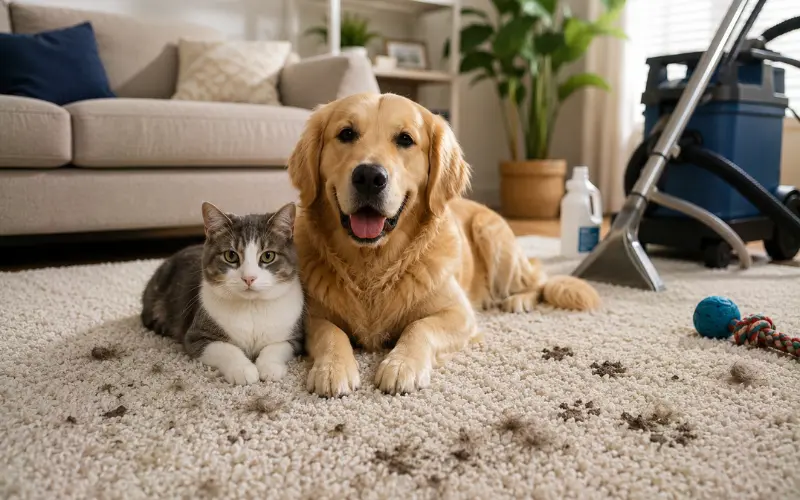
If you landed on this page while searching “carpet cleaning for pet owners”, you likely have pets at home, like many owners, your carpets are tackling the daily realities of furry companions, such as urine spots, feces, shedding, tracked mud, and odours that settle right into the fibres, and your current cleaning routine probably feels like it’s not quite keeping up with what your pets are creating.
You’re not alone in this struggle. I say this from experience, and even my professional team acknowledges that carpet care for pet owners presents unique challenges that are tricky to resolve. Because of this complexity, my team and I have put together some practical techniques tailored to the specific issues pets cause.
Keep reading, as we share pet-friendly carpet cleaning methods in this piece that go beyond quick fixes and address the root cause so you can maintain fresher, cleaner carpets.
But before we get into the techniques, let’s have a quick peek at the reasons which we think make carpet cleaning difficult for pet owners in the first place.
Why Pet Owners Struggle With Carpet Cleaning?
My team and I know that uncertainty about effectiveness is one of the most prominent frustrations pet owners face. Not knowing which products actually work on pet stains or which techniques penetrate deep enough, the task feels tedious.
But, in our observation, that's not it; there are some other aspects which many owners neglect, which actually have an impact. Let’s have a look:
- Continuous interruptions from pets
While treating a urine spot or faeces stain, a dog or cat walks across the carpet, or knocks over the cleaning solution. This happens as they are naturally curious, making it difficult to execute cleaning undisturbed.
- Containment creates behavioural disruptions
Some owners try to isolate their pets during cleaning by tying them up or restricting them to another room. However, this often triggers barking, whining, or aggressive behaviour, especially in pets with separation anxiety or territorial instincts. The noise and stress still disrupt the focus and process.
- Multiple messes are happening simultaneously
By the time you’ve cleaned one urine or faeces incident, another has already occurred elsewhere. This often leads to ineffective cleaning, and the carpet stays messy.
- Pets returning to problem spots
Once a pet has marked a location, they’re drawn back to the same area. Without eliminating the odour (which requires professional deep cleaning), owners are fighting a losing battle.
- Limited access during cleaning
With pets roaming the house, you can’t freely block off areas or apply stronger treatments without worrying about their safety. This constant presence restricts your options, slows the process, and makes thorough carpet care harder to achieve.
- Time and energy
Homeowners juggle tasks such as feeding, walks, playtime, and training of their pets. Adding frequent carpet spot‑cleaning to that routine becomes exhausting and often gets ignored.
Carpet Cleaning for Pet Owners: 4 Tips to Consider
Now that you’re familiar with aspects suggesting why it's tough, it’s time to address them directly. We have outlined practical, tailored solutions that go beyond generic advice and deliver lasting results if executed properly.
Here's what we expect you to do:
#1. Clean Urine, Faeces, Vomit
Pet urine and faeces contain proteins and bacteria that penetrate the fibres of carpets, creating odours and encouraging pets to re‑soil the same spot. Vomit introduces acids and food particles that stain and damage fibres.
- Blot fresh urine: Use paper towels or a clean cloth to absorb liquid before it spreads. Don’t rub; blot from the edges towards the centre.
- Apply enzyme cleaner: Breaks down urine compounds that standard cleaners leave behind. Essential for odour removal and preventing repeat incidents.
- Let it sit: Enzymes need time (10 to 24 hours) to fully digest organic matter.
- Rinse and dry: Flush with clean water, then blot or wet‑vacuum to remove moisture.
- For dried urine/faeces: Spray enzyme cleaner, cover with plastic to trap moisture, and allow longer dwell time before rinsing.
- For vomit: Scoop solids, blot with cool water, apply enzyme cleaner or vinegar solution, then deodorise with bicarbonate of soda.
Safety Note: The UK Health Security Agency (UKHSA) mentions that exposure to ammonia can cause health issues. Also, in our experience, applying such solutions to pet urine worsens odours as urine components have ammonia in them. Not to mention, it may also encourage pets to re‑soil the same spot.
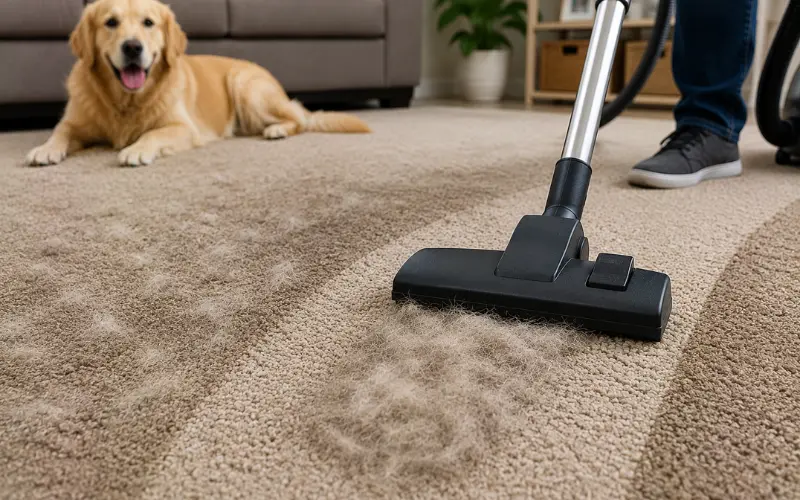
#2. Remove Pet Hair
Pet hair carries dander and oils that cling to fibres, clog vacuums, and worsen allergies if not removed regularly.
- Vacuum frequently: Strong suction and motorised brushes lift embedded hair from the fabric.
- Use a rubber broom: Static grip pulls hair that vacuuming might miss.
- Lint rollers/tape: Quick fixes for small areas or upholstery, where hair infestation is minimal.
#3. Clear Tracked-in Dirt
Pet paws bring soil, grit, and moisture indoors, which crumble into fibres and cause long‑term wear if untreated.
- Spot clean: Allow mud to dry fully, then break it up gently and vacuum to lift debris without damaging fibres.
- Blot wet mud: If mud remains damp, blot carefully with a cloth to absorb moisture before vacuuming. This prevents soil from being ground deeper into the pile.

#4. Eliminate Odours
Odours linger because organic residues seep deep into fibres and underlay, releasing smells over time.
- Sprinkle bicarbonate and distribute across the entire carpet, let sit 15 to 30 minutes, then vacuum thoroughly. It neutralises odours naturally.
- Use carpet freshener sprays to keep fabric fresh between deep cleans.
- Improve ventilation, so airflow disperses lingering smells.
- Get professional steam cleaning done regularly by pros like us, as heat and moisture lift residues from the base of fibres.
When to Call in Professionals
Maintaining carpets with pets is tough, even after regular cleaning. At times, there are clear signs that carpets need expert intervention. Recognising these ensures you don’t waste effort on DIY methods and secure your carpet before permanent fabric damage.
Signs indicating the need:
- Persistent odours linger even after thorough cleaning
- Carpet stains reappear despite repeated DIY attempts
- Allergy flare‑ups linked to paw dust, pet dander, or ammonia smell
- Matting and fibre wear that vacuuming no longer restores
- Multiple pet accidents overwhelm household cleaning routines
Pro tip: Train your pet to avoid carpet areas, especially for urinating or faecal discharge.
Ditch The Concerns and Let Professional Cleaners Handle Your Carpet
Consistent carpet cleaning for pet owners means more than tackling surface messes. It involves understanding the causes behind odours, stains, and fibre wear, then applying the right cleaning actions. From biological incidents like urine or vomit to tracked‑in mud and persistent pet hair, each issue demands a specific action. But sometimes, it's best to seek help from carpet cleaning specialists.
At Alliance Carpet & Upholstery Cleaning, my experienced team understands the challenges faced by pet owners. We carry out every job with care and attention to detail, using eco‑friendly solutions alongside high‑grade van‑mounted carpet cleaning machines and specialised drying equipment. This makes carpets spotless, neutralises pet odours, lifts embedded hair, and fosters a healthier indoor environment.
Give us a call before your pet makes your carpet messier.
FAQs
1) Can dog pee ruin carpet?
Dog urine can permanently damage carpet fibres and backing if left untreated, leading to discolouration, lingering odours, and even mould beneath the surface.
2) How much does professional carpet cleaning cost?
Costs vary by home size and service, but UK pet‑owner households typically spend £60 to £120 per session for thorough deep cleaning.
3) Can carpet cleaning remove pet odours completely?
Yes, enzyme‑based and steam cleaning neutralise odours at the fibre level, preventing smells from resurfacing after treatment.
4) How often should carpets be cleaned with pets?
Pet households benefit from professional cleaning every 6 to 12 months, or every 3 to 6 months if multiple pets are present. However, whether more frequent carpet cleaning for pets is needed or not can only be determined after a thorough assessment. Contact us so my team can help you lay out your schedules.

Peruse more ideas and tricks for your home here:
Lorem ipsum dolor sit amet, consectetur adipiscing elit.

