


How Long Does Carpet Take to Dry After Cleaning? (And How to Speed It Up)
“How long does carpet take to dry after cleaning?”
This is the question our technicians hear almost every time they are on site for a carpet cleaning job. It’s obvious since homeowners want their rooms back in use as quickly as possible, and our team provides a tentative timeframe.
What’s surprising is that many clients admitted to our technicians that their attempts to dry after DIY cleaning often left them with damp, musty carpets for days. Some even shared how the fabric began to look damaged. In our experience, this happens because of improper drying techniques or poor ventilation.
Regardless, it made us realise how important it is for owners to know about factors affecting carpet drying time, proper ways to dry carpet faster after cleaning and how professionals dry carpets thoroughly.
Why is Carpet Quick Drying Necessary?
Carpets that remain damp for extended periods are highly vulnerable to mould, mildew, and fibre damage. Our team notes that moisture trapped in the pile or underlay can begin fostering microbial growth within 24 to 48 hours. In fact, the UK’s National Carpet Cleaners Association highlights that the slightest dampness could allow mould spores to multiply and must be prevented.
Continued mould growth can trigger health issues and release odours which compromise health. Also, persistent dampness can cause structural damage. Hence, quick drying is significant to prevent unpleasant odours, protect indoor air quality and maintain the carpet’s fabric structure.
How Long Does Carpet Take to Dry After Cleaning? Factors Which Affect Time
DIY carpet cleaning often leaves fibres damp for far longer, with drying stretching anywhere from 12 to 48 hours, depending on cleaning solutions or water used for rinsing, airflow, and carpet type. Limited tools and random drying attempts, moisture lingers, raising risks of odours and fibre damage.
Professional cleaning systems, by contrast, remove far more water, cutting drying times to around 6 to 12 hours, or as little as 2 to 4 hours. This significant difference is mainly due to advanced equipment and controlled techniques to ensure quicker, safer drying.
Factors Affecting the Drying Time of Carpets
Drying times vary widely because not just methods but also several underlying conditions influence how quickly moisture leaves the fibres. Recognising these conditions is the key to understanding why carpets sometimes dry fast and other times remain damp for far longer.
- Cleaning method: Traditional steam cleaning saturates fibres with hot water, leaving carpets damp for 6 to 24 hours. Very low‑moisture or encapsulation cleaning uses minimal water, reducing drying time to 2 to 4 hours. DIY rental machines often lack strong extraction, so carpets can remain damp for much longer.
- Weather conditions and airflow: High humidity slows evaporation, extending drying time. Without airflow, DIY cleans often stay damp for days.
- Carpet thickness and fibre type: Dense wool or shag carpets hold moisture longer, often doubling drying time compared to low‑pile synthetics like nylon or polyester. DIY methods struggle more with thick fibres, as weaker machines leave excess water behind.
- Soil level and water use: Heavily soiled carpets require more water and cleaning solution, which prolongs drying. Light maintenance cleans dry faster. DIY users often over‑apply water or detergent, extending drying unnecessarily.
- Equipment quality: Professional extraction machines remove far more water than DIY rental units, reducing drying time significantly and lowering risks of bacteria growth or fibre damage. DIY equipment leaves more moisture, meaning carpets take longer to dry and are more prone to odours.

5 Key DIY Tips on How to Make Carpet Dry Faster After Cleaning
Knowing factors affecting drying time is just the beginning. To improve the drying time of carpets, you need to follow a meticulous approach and smart ways. Let’s check out some of the best ways shared by our expert to dry carpet faster after cleaning:
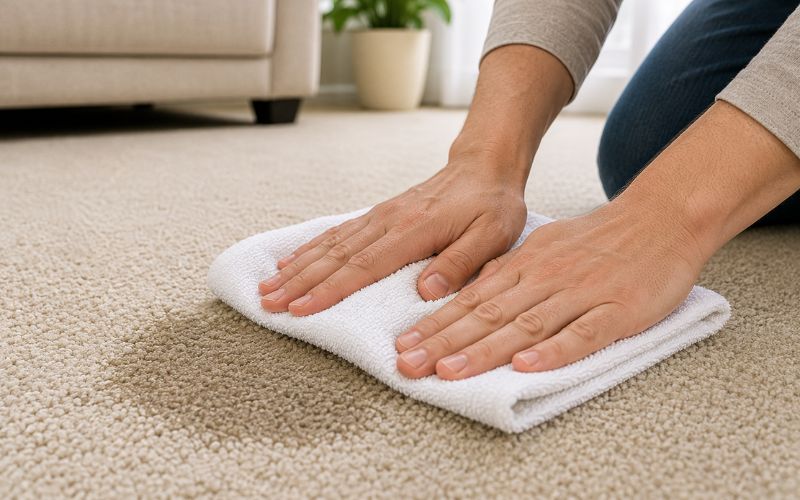
#1. Blot Excess Moisture
Our technicians say the best way to dry carpet after cleaning is pressing clean towels firmly into wet spots. This lifts a significant portion of moisture before any other drying method is applied, making subsequent techniques more effective and preventing moisture from seeping deeper into the backing.
Note: Avoid blotting too hard, as it can push moisture inside the fabric layers.
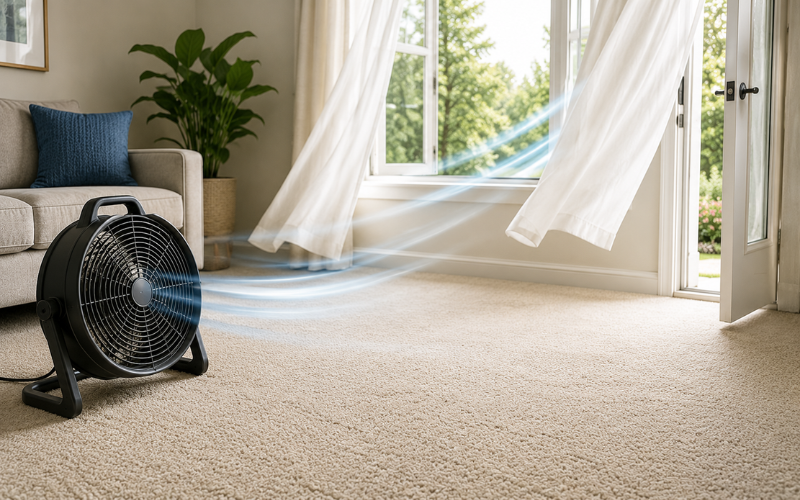
#2. Improve ventilation
My team often notes that, even on cooler days, improving carpet drying time after cleaning is not hard if proper airflow is maintained. Open windows to establish cross‑ventilation so damp air escapes and fresh air circulates. This reduces heavy, humid conditions and is one of the most natural ways to speed up carpet drying.
#3. Position Fans Strategically
Place two to four fans around the room to direct airflow across damp areas. If you have high‑velocity air movers, the same type used by carpet cleaning professionals, under ideal conditions, it can cut drying time to just 4 to 6 hours.
Key Note: If you have a ceiling fan installed within the house or an HVAC system, keep them running as well to maintain continuous air circulation and accelerate evaporation.
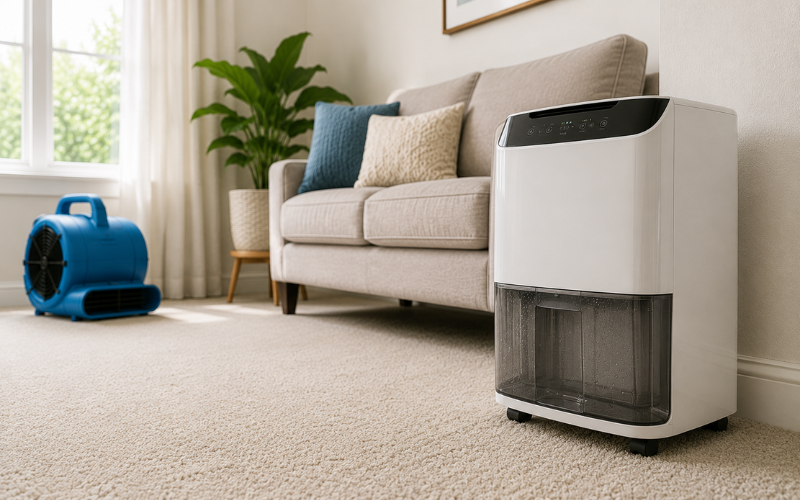
#4. Use dehumidifiers
Control humidity using dehumidifiers to pull excess moisture from the air, preventing mould growth and complementing the work of fans. Lowering indoor humidity is one of the most effective ways to stop microbial activity in damp carpets and secure the fabric.
#5. Manage temperature
Warm air absorbs moisture faster than cold, so raising the room temperature to around 24 to 27°C helps carpets dry more efficiently. Adjust your thermostat or central heating to maintain this range, and keep the warmth consistent rather than fluctuating.
When paired with fans or dehumidifiers, this balance ensures fibres release moisture quickly without overheating, providing you with a safe and effective way to accelerate drying.
Now, if you play your cards right and follow these suggestions given by our technicians, you will observe a massive drop in drying hours, expect it to go from 24-48 hours to 10-12 hours.
You may find this helpful: Carpet Care Habits Every Homeowner Must Follow
Is Carpet Drying After Professional Cleaning Needed?
Professionals like us use industrial-grade equipment to clean and dry carpets. So, you can leave the carpet as it is, and let it dry naturally to maintain optimal fabric condition. Still, if you wish to accelerate drying time for using the carpet sooner, follow the usual methods: Open windows, switch on fans, or use dehumidifiers.
Technicians also suggest that vacuuming can help dry the surface, but suction needs to be precise to avoid any fabric distortion. Also, instead of putting in efforts after professional carpet cleaning is done, my team believes it's better to improve ventilation within the house before the cleaning crew arrives, drying gets quicker naturally when pros clean and dry your carpet.
Save Time And Team Up with Pros Like Us For Quick Carpet Drying
The answer to How long does carpet take to dry after cleaning depends on several factors. Surrounding conditions, ventilation, and tools availability. It's trickier than most homeowners think. DIY attempts often stretch drying to days, while professional systems cut that time safely. It’s best to follow the tips shared by pros, or allow them to dry the carpet and get it done quicker.
At Alliance Carpet & Upholstery Cleaning, my team and I have more than five years of experience in carpet cleaning. We use effective, eco-friendly solutions to deep clean carpets, eliminating dust, allergens, stains, and completely drying them using quality drying equipment. You won’t have to worry about drying carpet yourself once my team is done.
Give us a call now to book your carpet cleaning session today.
FAQs
1) Can you walk on carpet after cleaning?
Not immediately, carpets need time to release moisture safely. Walking too soon risks re‑soiling and fibre damage, so wait until the surface feels dry, usually 6 to 12 hours, before allowing light foot traffic, or as suggested by carpet cleaning specialists.
2) Will wet carpet dry on its own?
It does only if airflow and humidity are favourable, and moisture evaporates naturally. Without ventilation or controlled weather conditions, carpets may stay damp too long, risking mould, odours, and fibre damage.
3) How soon can you put furniture back after carpet cleaning?
Not immediately, carpets should dry fully first, within 24 hours, before furniture is placed. Even after complete drying, my team and I often advise putting furniture after a short buffer (45 minutes or an hour), to avoid fabric distortion or indentations, ensuring fibres settle safely and sustain no damage.
4) What happens if the carpet doesn't dry?
If the carpet doesn’t dry, trapped moisture breeds mould, odours, and fibre distortion. Water can also seep into walls and subfloors, causing structural damage and spreading dampness to nearby areas, worsening health risks and repair costs.

Peruse more ideas and tricks for your home here:
Lorem ipsum dolor sit amet, consectetur adipiscing elit.

