


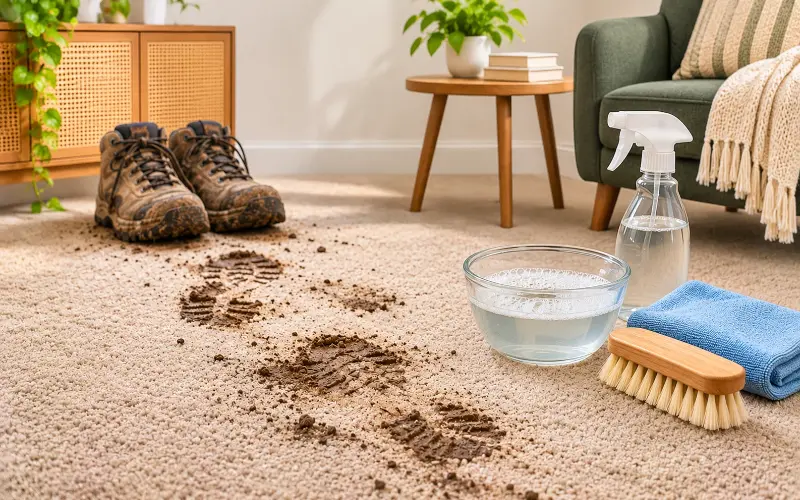
How to Remove Mud From Carpet?
Muddy boots, wet dog paws after a walk, and children racing back in from the garden are all part of everyday life. Regardless of the season, outdoor dirt seems to find its way indoors, leaving carpets covered in muddy footprints and forming stubborn stains. Hence, knowing how to remove mud from carpets is more important than ever.
Continue reading as I walk you through safe and effective methods to remove mud without damaging your carpet fibres. But before you get into the steps, you should know why removal is important.
Why Remove Mud From Carpets?
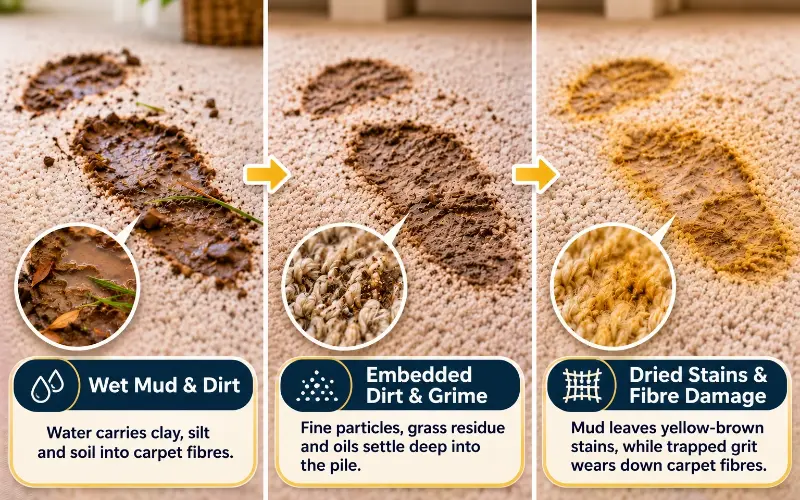
Mud appears to be a simple thing to deal with, but it's a mix of water, fine clay, and silt. When it hits your carpet, water carries those tiny particles deep into the carpet pile. The clay then covers the fibres and dries into a hard, dull film.
It also contains traces of broken leaves, grass fluid, and oily road filth. These natural tannins and oils soak into the fibres and stain the carpet. That is why untreated marks often turn yellow-brownish over time.
Leaving mud as it is makes the damage worse every day. As you walk over the carpeted area, the trapped dust grinds against the yarns like sandpaper, wearing down the pile. Meanwhile, oils and stain marks bond deeper into the fibres, making a simple spot or muddy footprints on carpet much harder to clean.
How to Remove Mud From Carpet with Simple DIY Steps?
Now that you know how quickly trapped mud can damage your carpet, acting fast with the right technique is necessary. The safest way to lift mud without spreading the stain is to clear the dry soil first; if the mud is wet, wait until it's dry.
Many of you may be wondering, "Why should I let mud dry before cleaning it? Well, it's simple: when mud is wet, wiping or scrubbing pushes fine clay deeper into the carpet pile. This spreads the stain mark wider. Waiting just long enough for the surface to turn solid lets you lift the bulk of the soil cleanly without grinding it into the fibres.
Once the mud is dry, scrape it with a blunt butter knife or the edge of a spoon. Work from the outer edge inward to avoid spreading. When done, follow these steps to clean your carpet safely:
- Vacuum the muddy area thoroughly. Make slow passes from different directions to lift all loose grit and dust before applying any solution.
- Make your cleaning solution. Mix a few drops of mild washing-up liquid into lukewarm water (roughly 250ml) in a small bowl. (Always test this mixture on a hidden corner of the carpet first to check for colourfastness.)
- Wet a clean white microfibre cloth with the solution. Blot the stained area (never rub). Move to a clean section as soil transfers. Work from the outside of the stain towards the centre. Avoid soaking the carpet.
- Rinse the area. After the stain feels lifted, take a separate clean cloth with plain lukewarm water. Blot the area lightly to clear away any soap residue. Continue until no cleaning solution remains.
- Dry the area. Press dry towels onto the area to absorb the moisture. Open a window or aim a fan at the spot. Wait until the carpet is completely dry. Vacuum the area again. This will properly restore the fabric pile.
How to Remove Mud From Carpet if Washing-up Liquid Mix Fails?
The DIY steps will lift most mud. However, sometimes, a faint mark remains after using washing-up liquid and lukewarm water. This means that the soil likely holds excess oily road dirt or plant tannins.
In my experience, when this remedy doesn't work, most homeowners scrub harder on a second pass. My team and I often suggest avoiding doing so and trying these safe alternatives instead:
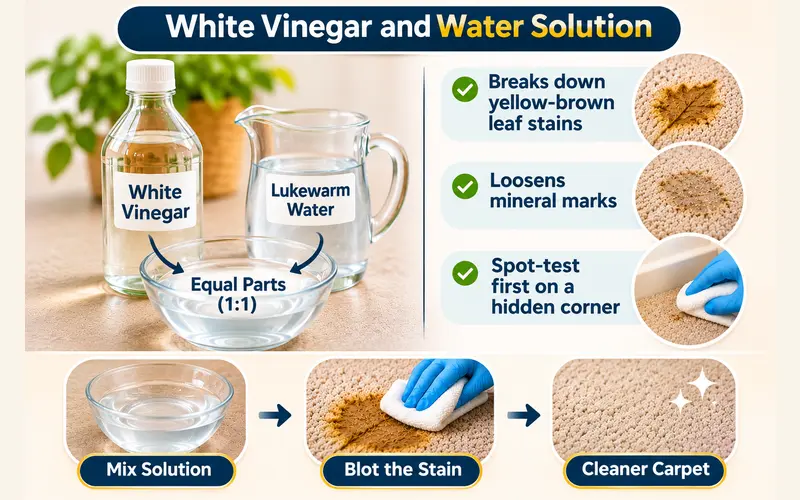
- White vinegar and water solution: Mix equal parts distilled white vinegar and lukewarm water. This mild acid breaks down stubborn yellow-brown leaf stains and mineral marks. Spot-test on a hidden corner first.
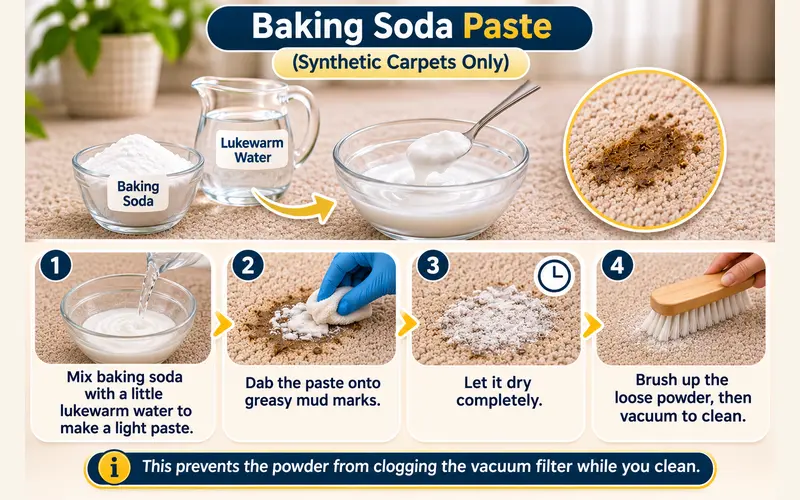
- Baking soda paste (synthetic carpets only): Mix baking soda with a little lukewarm water to make a light paste. Dab it onto greasy mud marks. Let it dry completely, brush up the loose powder. This prevents it from clogging the vacuum filter while you clean.
If natural remedies don't work, consider a pH-neutral carpet cleaning solution. This is the safest approach, especially for delicate wool or silk carpets.
Now, if you are dealing specifically with dog foot marks, the steps will remain the same with minor adjustments. Because dogs roam freely through grassy, unpredictable areas, they pick up extra dirt and organic waste alongside regular soil.
Here’s how to clean muddy dog paw prints from carpet with a tiny change:
- Let the muddy paw prints dry completely.
- Brush and vacuum away the loose, dried soil thoroughly.
- Blot with lukewarm water and mild washing-up liquid (Don't scrub).
- Repeat in gentle passes. Work through two or three light blotting cycles using natural mixes and then fabric-safe solutions until the paw prints are lifted cleanly.

Seasonal Mud Challenges: Spring, Summer, Autumn, and Winter
Weather in the UK changes frequently, and so does the type of soil that mud brings indoors. While the main cleaning steps remain the same, each season demands some adjustments.
1. Spring (Mostly Softening Ground and Garden Soil)
Frequent rain mixes with soft garden soil, tracking moist dirt inside on footwear and paws.
- The Challenge: Indoor heating system dries mud quickly, leaving a crusty film across high-traffic zones.
- How to Handle It: Let the mud get firm. Then treat it within 24 hours. Vacuum thoroughly ahead to lift loose grit, and use minimal water to prevent rings.
2. Summer (Dry Dust and Storm Mud)
Sudden summer rainfalls, dry garden dust, and wet lawn water from swimming pools or hosing down decks.
- The Challenge: Fine dry grit acts like fine abrasive grit on carpet fibres during peak foot traffic, while storm mud bakes hard in warm rooms.
- How to Handle It: Vacuum high-traffic areas more often during dry spells. If storm mud splashes onto the carpet, let it firm up before lifting the solids so you do not smear clay into the yarns.
3. Autumn (Wet Leaves and Slow Drying)
Fallen leaves, continuous drizzle, and wet footwear mark the start of peak mud season.
- The Challenge: Rotting leaves carry natural tannins that can turn yellow-brown as they age. Also, cooler air slows carpet drying.
- How to Handle It: Brush off wet leaves before stepping inside. If a stain occurs, use clean, colourless white cotton towels to draw out moisture and stop odours.
You may find this helpful: How to get carpet ready for autumn?
4. Winter: Slush and Road Salt
Melting snow, heavy rain, and road salt tracked in from pavements and driveways.
- The Challenge: Road salt leaves stiff white crusts. It attracts moisture and retains humidity, which can affect the carpet backing over time.
- How to Handle It: Vacuum dry salt before adding any water so it does not dissolve deeper into the pile. Improve ventilation in closed rooms with a fan or a slightly cracked window to help the carpet dry safely.
You may find this insightful: Why is carpet cleaning tough for pet owners?
When to Call Carpet Cleaning Specialists?
Natural remedies will handle surface dirt marks well. However, sometimes you will need help from professionals like us. Here's when you might need assistance:
- Multiple DIY attempts showing no visible improvement
- Mud has soaked deep into the carpet
- You are unsure about cleaning delicate natural fibres yourself
- Oily driveway dirt, tar, or heavy clay is mixed into the soil
- Dark stains reappear as the carpet dries
- Widespread muddy footprints cover large, high-traffic areas in multiple rooms
Let Our Experts Clear Muddy Mess of Your Carpet
Once you know how to remove mud from carpets, rainy-day footprints and muddy paw prints are much easier to handle. Just let the mud dry first, vacuum up the loose dirt, and blot gently instead of scrubbing. Tweak your cleaning steps for muddy paw prints and the extra dirt each season brings inside. If the mess is too much to handle, seek expert help.
At Alliance Carpet & Upholstery Cleaning, my team and I have more than 5 years of experience in delivering the best carpet cleaning results for people in Newcastle. Whether your carpet has heavy garden mud or muddy paw prints, we clean it all. Our technicians will use safe, eco-friendly products. Our van-mounted machines wash dirt from deep inside the carpet, and our drying fans leave your floors fresh, dry, and free of sticky soap.
Give us call now to get that muddy mess out of your carpet.
FAQs
1) Are mud stains permanent?
No, mud stains are rarely permanent. However, if you scrub the wet mud or use hot water while cleaning, they might. This action often pushes dirt and oils deeper into the carpet fibres, forming permanent stains.
2) How do I keep mud off my carpet?
Put a mat outside and a washable rug inside every doorway to trap loose dirt. Keep a boot tray and a towel near the entrance for wet rain boots and muddy paws, and ask everyone to take their shoes off indoors.
3) Why does ground-in dirt look like a permanent stain?
Outdoor soil tracked in on shoes often mixes with small amounts of oil and grease from paths and driveways. Repeated foot activity pushes this sticky mix deep into the pile, bonding it to the fibres. This is why it looks like a permanent stain.
4) How long should I wait before walking on a freshly cleaned muddy spot?
Wait a few hours. Check the carpet first and make sure it feels completely dry. Walking on moist fibres flattens the pile. Also, it traps new dirt from your shoes or socks straight back onto the clean spot.

Peruse more ideas and tricks for your home here:
Lorem ipsum dolor sit amet, consectetur adipiscing elit.

