


A Stepwise Guide on How to Clean a Sofa at Home Effectively
Homeowners often feel frustrated when sofas keep collecting dust, pet hair, and everyday spills. Even after repeated vacuuming or quick DIY attempts, odours linger, and fabrics look dull, making them question whether their approach is effective. This prompts them to look for tips on how to clean a sofa at home.
In my observation, the issue isn’t effort or technique but random execution. For instance, vacuuming without checking the fabric type or using the wrong cleaner for the care label. Professional cleaning helps, but as an experienced upholstery cleaner, I firmly believe homeowners should know about effective cleaning methods, as relying on repeated professional sofa cleaning services is neither budget-friendly nor practical.
With the right steps, you can maintain freshness, extend your sofa’s life, and reserve professional cleaning only for deep-set stains, delicate fabrics or, in an escalating situation, ensuring comfort without unnecessary expense. But, before that lets have a quick peek at the common errors made while cleaning.
Common Upholstery & Sofa Cleaning Mistakes
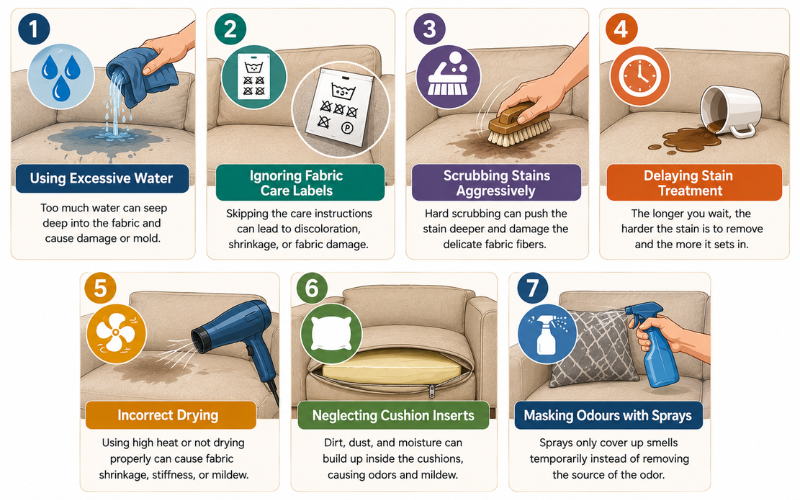
If you want to clean your sofas effectively, it's important to recognise the errors which compromise the results in the first place. My team highlights these common upholstery cleaning mistakes that are made frequently:
- Using excessive water: Causes shrinkage, adhesive breakdown, mould, and odours.
- Ignoring fabric care labels: Leads to colour bleeding, fibre weakening, and texture damage.
- Scrubbing stains aggressively: Pushes dirt deeper, enlarges stains, and damages fibres.
- Delaying stain treatment: Allows spills to bond chemically, making removal harder.
- Incorrect drying: Sets stains permanently and shrinks natural fabrics.
- Neglecting cushion inserts: Hidden dust, bacteria, and odours migrate to the surface.
- Masking odours with sprays: Odours are reactivated as spraying doesn't eliminate the source.
How to Clean a Sofa at Home Without Damaging the Fabric?
Sofa cleaning mistakes can compromise fabric strength and make it look dull. You must follow a meticulous approach to clean them. Random vacuuming or applying a solution won’t work.
Here's a stepwise approach which will help you clean your sofa thoroughly at home:
Step #1. Inspect Fibre Codes and Prep Sofa
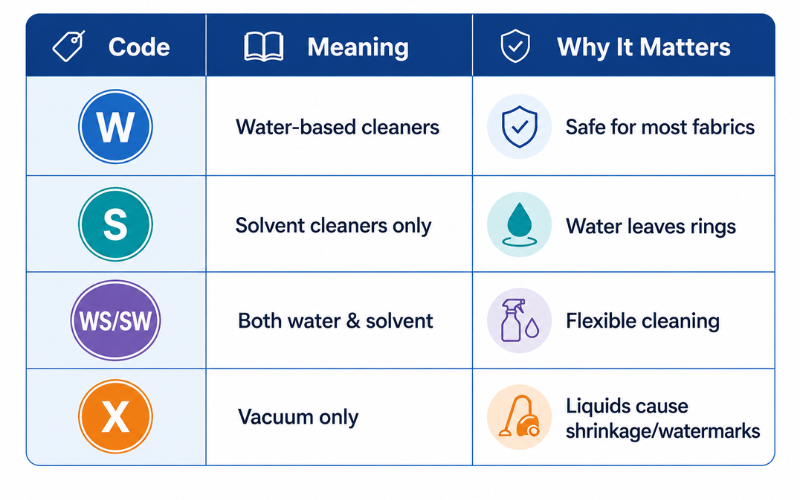
Much like clothing, sofas carry care labels that showcase safe cleaning methods. Ignoring these codes often leads to shrinkage, colour bleeding, or fibre damage. So preparation is about knowing the fabric before any cleaning begins.
Homeowners should locate the care tag (it's usually under cushions or at the back), note the cleaning code (W, S, WS, or X), and dust the sofa with a soft cloth or brush to remove loose dirt. Our technicians say this will keep the surface clean and dry, and ready for deeper treatment without risk of damage.
Step #2. Clean Sofa Cushions
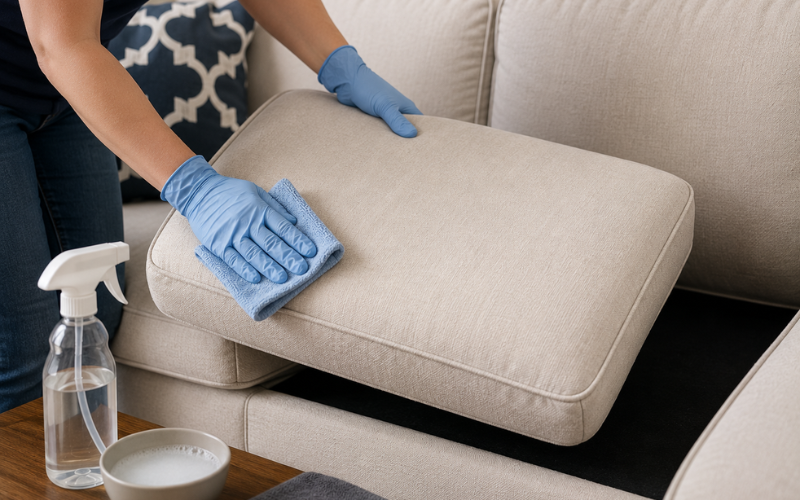
Cushions are the most used part of the sofa, absorbing dust, crumbs, and everyday wear. Neglecting them leaves the sofa looking tired and shortens the fabric's lifespan.
Here’s what I think you should do:
- Remove cushions and shake them outdoors
- Dab surfaces with a soft cloth or brush
- Spot‑clean stains based on label instructions
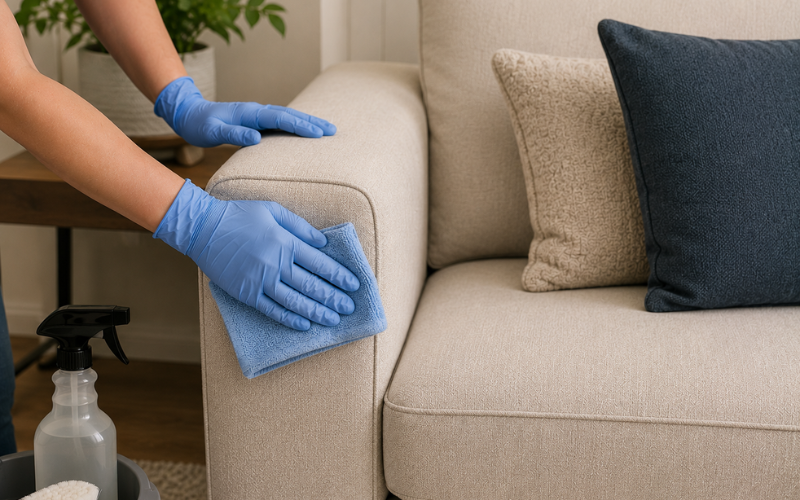
Step#3. Clean Sofa Arms and Headrests
Once you’re done with the cushions, move on to the arms and headrests. These high‑contact zones absorb body oils and show marks quickly, making the sofa look worn even if the rest of the area is clean.
Here’s what you need to do:
- Vacuum thoroughly using a brush attachment to lift dust and particles.
- Wipe gently with a damp cloth if the fabric allows.
- Apply a natural remedy for smudges or visible marks.
- Dry completely to prevent moisture damage or odour build‑up.
Step #4. Clean Sofa Seams and Gaps
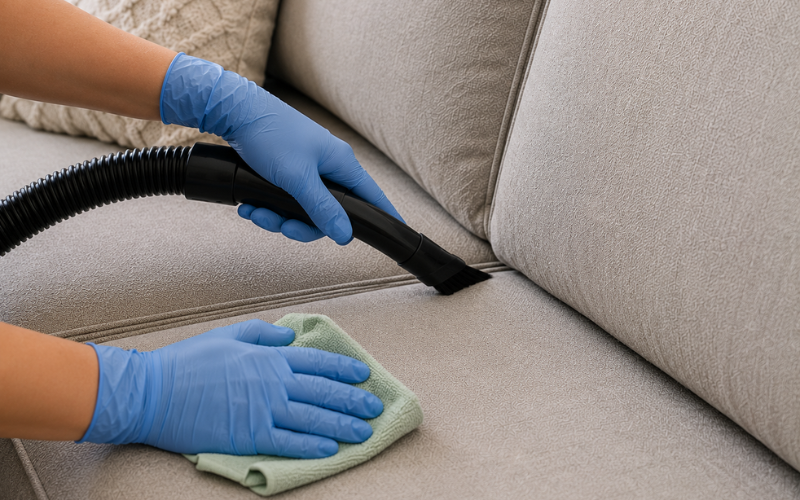
After cleaning arms and headrests, focus on seams and gaps. These hidden gaps collect crumbs, pet hair, and dust mites, which can migrate outward and cause odours or fabric wear.
Here’s what you need to do:
- Vacuum seams using a crevice tool or nozzle.
- Brush gently to loosen trapped debris.
- Check hidden folds for particles and clear them out.
Step #5. Refresh Sofa Exterior( Back and Sides)
In our observation, the exterior part of sofas is often overlooked while cleaning. They collect dust and appear dull. Hence, thorough cleaning is necessary to maintain hygiene and improve the sofa’s overall appearance.
Here’s what you need to do:
- Dust with a microfibre cloth to lift surface particles.
- Vacuum surfaces using a brush attachment for fine dust.
- Wipe gently using a safe solution based on the fabric code.
- Dry thoroughly to maintain a consistent finish.
Step #6. Clear Cushion Inserts
After refreshing the exterior, our technicians insist on cleaning cushion inserts. The reason is simple: these hidden layers harbour allergens and odours that undermine surface cleaning.
Here’s what you need to do:
- Remove inserts and air them outdoors.
- Shake thoroughly to release dust.
- Replace only when dry to avoid moisture trapping.
Step#7. Eliminate Bad Smell
Sofa fibres cling to smells from pets, spills, and everyday use, and masking them only hides the issue temporarily. Thus, once you feel that the sofa is free of dirt, neutralise odours from its source.
Here’s what you need to do:
- Sprinkle baking soda across the fabric and let it rest for 20 to 30 minutes.
- Vacuum thoroughly with a brush attachment.
- Combine baking soda with a few drops of essential oil (lavender, lemon, or eucalyptus) before sprinkling. Or mix it with cornstarch to boost odour absorption.
You may find this useful: How Often to Deep Clean Soft Furnishings
Signs You Need Professional Sofa Cleaning
Even the best way to clean a sofa at home has its limits, or lets say sometimes professional cleaning is the best way. I say this because DIY efforts can only go so far before hidden buildup takes over. Repeating cleaning steps may help a bit, but it might also compromise the sofa's appearance and durability.
Here's how you'll know your sofa needs professional cleaning:
- Stains are visible even after repeated cleaning attempts
- Odours linger despite applying baking soda or other remedies
- Fabric looks dull and lifeless even after thorough DIY care
- Allergens build up, causing sneezing or discomfort when using the sofa
- Fibres feel compacted or rough instead of soft and resilient
Refresh Your Sofa With Upholstery Cleaning Specialists
How to clean a sofa at home is now clear. All you need to do is follow the step‑by‑step routine that matches fabric codes and prevents damage. Each stage builds on the last, ensuring dust, stains, and odours are tackled in the right order.
With careful preparation and simple household remedies, you can restore freshness without risking fibre wear. But when DIY doesn't feel like an option, it's best to let pros clean your sofas.
At Alliance Carpet & Upholstery Cleaning, we provide top-notch professional upholstery cleaning across. My team uses WoolSafe-approved solutions, advanced truck-mounted systems and eco-friendly cleaning methods to refresh your sofa.
Call us now to get your sofa cleaned by our dedicated team.
FAQs
1) How much does it cost to professionally clean a sofa?
Professional sofa cleaning in the UK costs between £40 and £100 per item, with smaller armchairs starting at £30 to £45 and larger corner sofas exceeding £150. The exact price depends on size, fabric type, and cleaning methods used. Contact us to know about different rates.
2) How often should you clean your sofa?
You should vacuum your sofa weekly and deep clean it every 3 to 6 months to keep dust, allergens, and stains under control. High‑traffic homes with kids or pets may need more frequent cleaning sessions to prevent buildup.
3) Can I use vinegar to clean my sofa?
Vinegar works on fabric sofas but only when diluted. The undiluted form is too acidic, disrupting finishes and etching fibres, which causes dullness and watermarks. Its strong acidity destabilises dyes and weakens the protective coating. So, always dilute with water before using. it on your sofa.
4) Will baking soda discolour fabric?
Baking soda is safe on most fabrics and won’t cause discolouration when used correctly. Issues only arise if it’s left sitting too long or applied to delicate, dye‑sensitive materials, where residue can form light patches.
5) Can you steam clean a sofa at home?
You can steam clean a sofa at home, but only if the right tool is available and the care tag permits water‑based cleaning (W or WS). Without a proper upholstery steam cleaner, attempting it risks overwetting, shrinkage, or mould growth. It’s best if pros handle it.

Peruse more ideas and tricks for your home here:
Lorem ipsum dolor sit amet, consectetur adipiscing elit.

